WW2 Submarine Story – USS Garfish Fiction

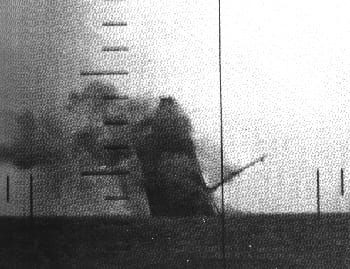
USS Garfish (SS-411) — South China Sea, fourteen miles southwest of Formosa October 1944
I.
The smell came first, as it always did.
Diesel and bilge-water and the particular sweetness of two dozen men's unwashed bodies compressed into a steel cylinder for thirty-one days — it lived in everything, your dungarees, your hair, the back of your throat when you swallowed. You stopped noticing it by the end of the first week and forgot entirely that the world smelled of anything else. It was only on the surface, on night watch with the hatch cracked and the Pacific air coming down the conning tower in a cool column, that you remembered. The smell of the sea hit you then like a grief you hadn't known you were carrying.
Lieutenant Commander Thomas Reeves stood the mid-watch with his elbows on the bridge coaming and his binoculars raised south-southeast, where the cloud deck sat low and starless over nothing. They had been running on the surface for four hours, diesels churning the water white behind them, batteries charging in the steady roar that made conversation impossible and thought difficult. The engines smelled of heat and combustion. The radar mast behind him swept its invisible arc every four seconds, and every four seconds the talker below reported: nothing, sir. Nothing, sir. Nothing.
Reeves lowered his binoculars and rubbed his eyes with the heel of one hand.
It was 0140. His relief wasn't due for another ninety minutes.
"XO." One of the lookouts — Seaman Ostrowski, eighteen years old, from a town in Wisconsin that didn't have an ocean in any direction — turned from the port quarter. "I've got something."
Reeves raised his glasses.
There. South-southeast. Not a light — the Japanese were careful about lights — but a darkness against the darkness that moved wrong. Too solid. Too purposeful.
"Talker." He kept the glasses up. "Get the Captain."
Commander Warren Haley came through the hatch in his skivvy shirt, his hair compressed flat on one side where he'd been sleeping. In the two years Reeves had served under him, he had never seen Haley flustered. He had seen him angry — quiet, cold, surgical anger — and he had seen him afraid once, south of Truk, when a depth charge had blown the Number Two periscope off its housing and they had lain at 320 feet in water that was supposed to be 290 feet deep. But not flustered. He took the binoculars Reeves offered without a word and looked for a long moment.
"Convoy," he said. "Escorts leading." He lowered the glasses and looked at Reeves in the dim glow coming up from the hatch. "Big one, you think?"
"The way they're spaced. Yes, sir."
"Then we go to work." He handed back the binoculars. "All ahead one-third. Battle stations."
The klaxon was a sound that rewired the body — three long blasts that turned the stomach to ice water and the hands to instruments operating independently of the mind. Men ran in the narrow passageway below, sliding through hatches, the sound of bare feet on steel decking, someone saying move, goddamn it, move in the torpedo room forward. Sixty-three men finding their place in a space that had, Reeves had once calculated, approximately as much cubic footage as the first floor of a moderately sized house.
Haley dropped below. Reeves stayed topside.
The convoy was resolving now. He could make out the dark shapes — a destroyer to the north, running the screen; behind it, the high squared silhouette of what looked like a tanker; and behind that, more shapes, low and angular, the sort of profile that meant a transport, men and materiel moving south toward the Philippines. Toward whatever the Japanese were building there. Toward Leyte.
He had read the intelligence brief twice. American forces had landed at Leyte Gulf five days ago. The Imperial Navy was moving everything it had. These ships — the tanker, the transport, the men asleep in their bunks below the waterline — were part of something whose outcome neither he nor anyone else could yet see.
This was not something he allowed himself to think about very long.
"XO." The talker had the sound-powered phone to his ear. "Captain says come below."
II.
The control room smelled of electrical insulation and sweat. The diving officer stood at his plane controls, eyes on the depth gauge. The navigator bent over his chart table with a grease pencil, working angles. The fire control party occupied the forward end of the room around the TDC — the Torpedo Data Computer, a machine the size of a refrigerator that took in bearing, range, and angle-on-the-bow and calculated the firing solution automatically, or as automatically as anything in 1944 could manage.
Haley stood at the periscope well with his arms folded, studying the plot.
"Best angle for the tanker," Reeves said, taking a place at his shoulder.
"That's what I'm working out." Haley moved his finger across the chart. "He's on a base course of about two-four-zero. Making, what, nine knots?"
"Eight and a half. Maybe nine."
"The escort pattern." He looked at the navigator. "What did you get, Poole?"
"Two destroyers on the screen, Captain. One ahead, one on the starboard bow. They're running a box pattern. Interval of about two thousand yards."
Haley picked up the angle-on-the-bow and said nothing for a moment.
In the forward torpedo room, Petty Officer Second Class Daniel Kowalski and three other men were loading the last of six Mark 18 electric torpedoes into the forward tubes. The Mark 18 ran on electric motors — no wake, no trail of bubbles rising to the surface to mark its course. An invisible fish. They had replaced the Mark 14s after the debacle earlier in the war, when two years of patrols had been lost to torpedoes that ran deep or failed to detonate, and the men who fired them had died in subsequent depth charging wondering whether it had been their own torpedoes that betrayed them.
Kowalski checked the depth setting on Tube Three for the second time. He was not a man who made mistakes — he was the kind of man who checked twice specifically because he knew what happened when other men didn't.
"Set," he called.
"Set," his loading party confirmed.
He wiped his hands on a rag and listened to the ship. You learned to listen to a submarine the way some men listened to weather — for the particular sounds that meant things. The diesels had dropped in pitch, which meant they were reducing speed. He felt the slight tilting of the deck. They were going to periscope depth.
Here we go, he thought, without quite forming it as a thought.
III.
The ship submerged in under two minutes.
The diesels stopped. The sudden quiet was its own kind of sound. The electric motors took over — a low, nearly inaudible hum — and the hull ticked as it adjusted to the pressure. At sixty feet the sea was black. At eighty feet it was a different kind of black, one that had weight to it.
Haley rode the periscope up.
The optics broke the surface. He pressed his face to the eyepiece and made a slow sweep — destroyer, bearing zero-four-five, approximately eighteen hundred yards. Then the tanker. Then the transport behind it, riding lower in the water than the tanker, which meant it was loaded. He estimated four thousand tons of displacement. Maybe six.
"Bearing — mark."
"Zero-seven-eight."
"Range — mark."
"Twenty-eight hundred yards."
"Down scope." He stepped back, ran a hand over his face. "We'll fire four fish. Two-second intervals. Spread of half a degree."
Reeves acknowledged this and passed it to the TDC operator, who turned the dials without looking up.
What happened next was measured in minutes, but experienced in something slower and more granular than time. The ship moved at three knots, a barely perceptible crawl, angling to bring the bow tubes to bear. The TDC operator read out the continuously updated solution. The fire control party confirmed bearings. Haley went back to the periscope twice more, each look lasting fifteen seconds, no more — a periscope left up was a periscope that might be spotted.
The tanker was two thousand yards. Then eighteen hundred.
Sixteen hundred.
"Solution is good," the TDC operator said.
Haley looked at Reeves.
Reeves looked at the fire control party. Everyone's face had the same quality — alert, pale, doing a job. None of them looked afraid. This was not because they weren't. It was because fear had been metabolized into function, which was the only way a crew could work.
"Fire One," Haley said.
The ship shuddered. A rush of compressed air through the tubes, a thump that came through the deck into the soles of the feet, and then Kowalski's voice from forward: One away, running hot, straight, and normal.
"Fire Two."
Two away.
"Fire Three."
Three away.
"Fire Four."
Four away.
Haley stepped to the TDC and watched the solution track. Forty-two seconds to impact at the first fish's speed and range. He did not go back to the periscope. He stood very still with his arms folded and waited.
Thirty seconds.
Twenty.
The explosion arrived as a physical fact before it arrived as a sound — a compression wave that ran through the hull and up through the bones of every man in the ship. Then the sound, muffled and enormous, like a hand pressing hard against both ears at once. Then a second, and the crew understood from the two-second interval that it was not a second hit but the first torpedo's warhead detonating its cargo. The tanker was burning. Even through steel and seawater at depth, they could feel it burning.
Someone in the aft torpedo room let out a sound — half-word, half-exhalation — and was immediately quiet.
The third and fourth torpedoes hit eighteen seconds later.
"Reload forward tubes," Haley said, into the quiet that followed.
IV.
The first depth charge came at 0223.
It came from the port side, and it came without warning — the sonar operator had been tracking one destroyer and the second had come in at high speed from an angle that put it in a sonar blind spot. The charge went off above and two hundred yards ahead, and the ship's reaction was immediate and physical: the deck buckled under their feet, every loose object became a projectile, a light fixture exploded in the control room in a shower of glass that opened a cut above the navigator's eye. Cork insulation rained from the bulkheads.
"Right full rudder," Haley said. "All ahead flank. Take her down, three-five-zero feet."
Three hundred and fifty feet was seventy feet below their test depth.
The diving officer, whose name was Hendricks and who had been a civil engineer in Philadelphia before the war, said: "Aye, Captain," and put the bow planes on full dive.
The second charge was closer. The third was closer still — close enough that the concussion turned thought into sensation, sensation into pure animal present-tense. The lights dimmed. Something in the engine room released a burst of hot steam. Reeves grabbed the periscope housing and held on to it and thought of nothing useful.
Then the fourth charge, and the fifth, and they were in the pattern of it now — the destroyers working a contact, walking their charges back and forth through the water above in a grid, patient and methodical. The Japanese had gotten better at this. In '42 they had been erratic, careless. By '44 they had learned.
At 320 feet, Haley ordered all stop.
The motors ceased. The ship hung in the water, near-neutral buoyancy, making no sound except what could not be helped — the soft hydraulic sigh of the planes adjusting, the tick of hull metal under pressure, someone's breathing.
"Rig ship for silent running," the talker whispered into the phone.
In the forward torpedo room, Kowalski reached up without being told and stopped the ventilation fan. The room was immediately hotter. He could hear his own heart. Through the hull he could hear the destroyers — their screws a high, rapid throbbing that Dopplered up as they approached and down as they passed. He had learned to read this sound the way a man learns to read a road.
Passing, he thought. Still on us but passing.
The air in the forward torpedo room was, by this point, close enough to breathe with difficulty. They had been at depth for ninety minutes. Carbon dioxide built slowly, insidious — you became drowsy, then lethargic, then the decisions a man made got worse without him being aware they were getting worse. Kowalski felt the familiar press behind his eyes. He breathed through his nose, slowly, watching the men around him. Harrison was asleep or close to it against the tube bank. Ramos had his eyes open and was staring at the deckhead.
"Stay with me," Kowalski said, very quietly.
Ramos looked at him. Nodded.
The destroyers made two more runs. The seventh depth charge was close enough that a seam in the pressure hull opened a thin weeping line of water near the bilge — cold, dark, saline, a thin thread of outside sea pressing its way in. A machinist's mate named Ferraro found it twenty seconds after it started and jammed a wooden plug into it with his palm, leaning his weight on it. The water stopped.
Nobody spoke.
V.
At 0511 the screws overhead faded and did not return.
They waited another forty minutes. Haley came forward himself to check the men, moving through the ship without ceremony, stopping at each watertight compartment, looking at faces. He said nothing particular in the torpedo room — looked at Kowalski, looked at the tubes, glanced at Harrison, who had straightened up and was pretending he hadn't been asleep.
"Tubes ready?" Haley asked.
"Ready, Captain."
He moved aft.
At 0600 Haley ordered the ship to periscope depth and made a slow sweep of the horizon. Gray pre-dawn. The sea was empty except for a debris field — wood, something that might have been a life ring, a dark spreading on the water that was oil or was both. Three miles to the north, faint against the lightening sky, a column of smoke that was already thinning.
He ordered the ship to the surface.
When the hatch opened and the air came down the tower, Reeves was standing below it, and the cold and the clean of it hit him so completely that he stood for a moment with his eyes closed before following the Captain up.
The sea was flat. The horizon was empty. The sky was going the color of ash at the edges where the sun wasn't yet.
Haley stood at the bridge coaming and looked at the oil slick for a long time. He was not, Reeves understood, feeling what the movies would have him feel — no particular triumph, no neat emotion. He was doing what commanding officers did at moments like this, which was to complete a private accounting whose ledger Reeves would never see and which Haley would never describe.
"Log it," Haley said finally. "One tanker, approximately six thousand tons. Two hits confirmed." He paused. "Set course for Fremantle. We're done here."
He went below.
Reeves stayed on the bridge. Ostrowski was back at his post on the port quarter, and the other lookout whose name Reeves could never quite hold — Pulaski or Pasinski, something with a P — was on the starboard side, binoculars up, watching the horizon for what it might still produce.
The diesels started, the familiar roar of it, and the ship began to move south through water that was turning from black to a dark and unremarkable blue.
In the torpedo room below, Kowalski was drinking his second cup of coffee — terrible coffee, tepid, tasting of the pot it had been sitting in since midnight — and watching Harrison eat a piece of bread. The light in the torpedo room was the same light it was always: flat, institutional, unchanged by what had happened outside or above or forty feet beneath the surface. The tubes were loaded. The air smelled of diesel and sweat.
He drank his coffee.
Outside the hull, the Pacific lay in every direction farther than any of them could think about. Somewhere to the north, the debris of the tanker was spreading on the current. Somewhere further north than that, a war that none of them had chosen was arranging itself toward an ending nobody could yet see. Somewhere south and east of them, the men who had landed at Leyte were still fighting — would be fighting today, tomorrow, in the dark and the mud and the heat of it.
Kowalski finished his coffee and set the cup in the rack above the tube bank.
He thought, briefly, of the tanker's crew — thought it the way you thought about a thing you couldn't afford to think about too carefully. Then he stopped thinking about it. He had found, over thirty-one days and two previous patrols, that this was what you could do: think it briefly, then close the door. The door didn't disappear. But you could close it.
"Get some sleep," he told Harrison.
Harrison, who was already mostly asleep, said: "Mm."
The ship moved south. The diesels ran. The sea did what it did.
The U.S. Navy's submarine force comprised less than 2% of the naval service during World War II but was responsible for sinking 55% of all Japanese shipping lost in the war. By 1945, American submarines had so thoroughly severed Japan's supply lines that the country was importing almost nothing.
"Active sonar (ping), surface vessels or other submarines send out a high-energy acoustic pulse into the water. When it hits a solid object like a steel U-boat, it bounces back as an echo. Warships send out loud, rhythmic "pings" that bounce off a submarine's steel hull and return. The closer the warship gets, the quicker and louder the pings are heard".
"Passive Sonar (The Hydrophone), submarines use sensitive, silent underwater microphones to listen for the propeller blades or engines of enemy ships".