Fort Eben-Emael 1940 – Historical Fiction

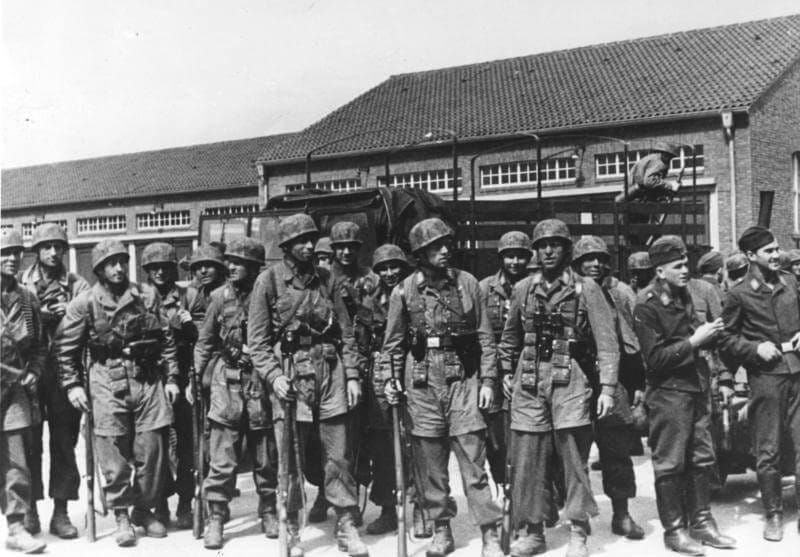
Fort Eben-Emael, Belgium — 10 May 1940, 04:18–06:00
I. The Silence Before
The rope went slack and then it was gone.
Gefreiter Paul Renner felt it the way you feel a hand releasing yours in the dark — not the thing itself, only the absence of the thing. The tow cable had connected them to the Ju-52 for forty minutes, the transport's three engines filling the world with noise and vibration, and now there was nothing. Nothing at all. The DFS 230 glider nosed forward and the sound died and what replaced it was something Renner had no word for. Not quiet. Quiet is the absence of noise. This was something structural, something that pressed against the ears like deep water.
He was twenty years old and he had never heard anything like it.
Around him in the narrow fuselage, seven men sat in two rows with their knees almost touching, their faces pale smudges in the pre-dawn dark. None of them spoke. Unteroffizier Kessler sat nearest the pilot's bulkhead, his eyes closed, his lips moving slightly around something that was either a prayer or a count. The shaped charges were stacked between the men's legs in wooden crates, roped and padded — fifty kilograms each, the new ones, the hollow-charge devices that nobody outside their unit was supposed to know existed. Renner had his hand resting on the nearest crate the way a man rests his hand on a sleeping dog.
Outside the thin plywood skin of the glider, Belgium was dark.
He could see nothing through the small scratched windows — only his own reflection floating against blackness, a young man in a jump smock and a Stahlhelm that sat too large for his head, because it always did, because he was the youngest man in Sturmgruppe Granit and the smallest. He had not shaved in two days. He thought about this with a clarity that surprised him, that the stubble on his jaw was the thing his mind chose to fix upon in the last minutes before landing on the roof of the most heavily fortified position in Western Europe.
The Maas valley came up at them in stages: first the smell of river water through the ventilation gap at the door's edge — mineral and cold, a living smell, the smell of moving water in darkness — and then the black shapes of trees resolving below, the ground coming closer without appearing to move. Hauptmann Witzig had told them the approach angle would feel wrong, that it would seem too flat, too gentle, that nothing in their experience of aircraft had prepared them for a thing that descended like a leaf rather than an arrow. He had been right. The fort itself was invisible. All they knew was that it was there.
Then Kessler opened his eyes.
"Anschnallen," he said. Brace.
II. The Landing
The grass came up and grabbed the skid.
There was no other word for it — grabbed — a violent snatching, a deceleration that threw every man forward against his restraints, and then the plywood sides of the glider shrieked against the turf and the nose dipped and Renner's Stahlhelm hit the man in front of him and then they were stopped. Twenty-three seconds from first contact to stopped. The whole eastern sky was just beginning to go from black to the colour of a bruise, a dark, low violet that touched nothing on the ground yet, and Renner kicked open the door and fell out onto Belgian grass.
It was cold. This surprised him. He had imagined heat, or at least the temperature of action, but the grass was damp and the air was four degrees and it smelled of earth and nothing else. He was on his hands and knees on top of Fort Eben-Emael and the fort felt exactly like a field. Like an ordinary Belgian field in the dark before dawn.
He grabbed a crate. Kessler was already moving, sprinting low across the plateau toward the nearest casemate, which was a grey concrete mass twenty meters to the north, its gun barrels visible against the paling sky as a pair of dark horizontal lines. Renner ran with the crate held against his chest and the weight of it — fifty kilograms — drove his boots deep into the wet turf and his breathing went ragged immediately. Behind him he heard the other gliders arriving, a sound like controlled crashes, wood and metal and grass in rapid terrible sequence, and then the voices of the other Gruppen spreading out across the plateau in the dark, each headed for their assigned emplacement, each carrying their impossible charges toward concrete that Belgian engineers had once declared proof against anything the German Wehrmacht could produce.
They did not know yet about the new charges.
Kessler had reached the casemate. Renner arrived ten seconds later and set the crate down and his hands were shaking from the cold and from the weight and he opened the crate clasps the way they had practised it in the dark forty times, fifty times, against a wooden mock-up in a pine forest in Germany, with a sergeant standing over them with a stopwatch and a disposition that suggested he found their results personally insulting.
Clasp, clasp, lift. Pin. Two turns of the magnetic clamp. Step back.
From somewhere inside the fort, very faint, came a bell. An alarm bell. Then a second bell, closer. Then nothing — the sound cut off as if swallowed.
"Ready," Renner said.
Kessler pulled the igniter cord.
III. What Fifty Kilograms Does
The shaped charge does not explode outward. This is the thing that made it new, that made it the thing nobody in the defensive architecture of Europe had yet accounted for. It sends a focused jet — not fire exactly, something beyond fire, a superheated lance of gas and metal moving at eight thousand metres per second — downward through whatever it is sitting on. Through concrete. Through steel plate. Through the two metres of reinforced casemate ceiling that Belgian military engineers had calculated could withstand direct artillery hits from the largest calibres then in existence.
Renner had his back against the side of the casemate, his cheek against the cold concrete, when it went.
The sound was not a bang. He had expected a bang — they had told him it would be loud, deafening, cover your ears — but what actually happened was a compression, a sudden absolute solidification of the air that he felt in his chest cavity and his sinuses and the back of his eyes, and then a sound that had no clean edge, that arrived and kept arriving, bouncing back from the ground and the sky simultaneously.
When he turned back the casemate roof had a hole in it.
Not the blasted ruin of artillery — not scattered rubble and exposed rebar and the theatrical destruction of bombardment. A hole. Roughly circular. The edges smooth in the way of something done with precision. Almost surgical. Smoke rose from it in a neat column into the early morning air, and from somewhere below, from inside the fort, there came sounds Renner had not expected.
Screaming. Very distant, muffled by depth. Then silence.
Then, distinctly, a voice calling in Flemish, calling a name, calling it twice.
IV. Inside and Below
What the garrison of Fort Eben-Emael experienced, twelve hundred men in tunnels and chambers and gun rooms beneath the plateau, was an earthquake.
That is what the survivors would describe, in the debriefings, in the histories, in the letters home that many of them were not permitted to send for some time: an earthquake. A series of impacts without origin, without direction, without the warning sound of incoming shells that would at least have given them something to locate, something to orient against. The charges detonated across the plateau in a sequence spanning four minutes, as the other assault teams reached their positions, and each one registered inside the fort as a physical blow delivered to the structure itself — not to a wall, not to a room, but to the fort, to the thing as a whole, as if the ground above them had become a drum.
Capitaine d'Infanterie Henri Marchal had been in the operations room when the first charge went. He was reviewing the morning readiness reports, which were satisfactory, which were always satisfactory, because Fort Eben-Emael was the most satisfactory fortress in Europe. Then the ceiling jumped.
He had not slept well. His daughter was three years old and she had his wife's eyes and he had been thinking about her eyes when the ceiling jumped and the overhead lights went to emergency red and every telephone in the operations room began ringing at once.
He picked up the nearest handset.
"There are men on the roof," said the voice at the other end. The voice belonged to a sergeant named Verbeke, whose post was in Casemate Maastricht I, which had just stopped functioning. "There are Germans on the roof. They are—"
The line went dead.
Marchal stood with the handset to his ear, listening to silence on a dead line, in a fortress that the Belgian Army had described in its public literature as absolument imprenable — absolutely impregnable — and the emergency lights made everything red, everything the colour of something that had already gone wrong.
V. Dawn
By five-thirty the sun had fully cleared the horizon and Renner sat with his back against the disabled Casemate Maastricht I and looked east across the Maas valley and ate a piece of bread from his field rations because Kessler had told him to eat something and Kessler was usually right about practical things.
The bread tasted of nothing. It tasted of bread.
Below him, the Albert Canal caught the early light — bronze and then gold, a beautiful thing, an ordinary beautiful thing in an ordinary Belgian morning that happened to contain the largest fortress in Western Europe, which was now partially under the control of eighty-five men. The bridges they were here to protect — the bridges the whole operation existed to protect, so that the armoured columns could cross, so that the campaign could begin, so that what was coming could come — the bridges were visible from here, two of them, the steel spans sitting low over the water in the morning light.
Around him the plateau was not a ruin but it was not right. The grass was scored and torn from the glider skids. Smoke rose from five or six points. One of the other casemates, the artillery emplacement designated Objective 26, had its gun barrels pointed at an angle it had not been designed to achieve — blown out of alignment by the charge, still now, no longer dangerous, no longer anything. From somewhere in the interior of the fort, muffled and intermittent, came the sound of Belgian engineers attempting to cut through the lower blast doors with whatever they had. It was a determined sound. It was not succeeding.
Kessler came around the corner of the casemate with his sleeve torn and a cut above his eyebrow that had stopped bleeding sometime in the last half hour, leaving a long russet line on his forehead.
"Koch wants a headcount," he said.
Renner nodded and stood and his legs were stiff and the bread was not finished but he wrapped it and put it back in his pocket. He thought about the voice on the other side of the concrete he was sitting against — the voice that had been there an hour ago, the Belgian voice calling a name — and he thought about the girl with his captain's wife's eyes, though he didn't know that, he was only thinking about ordinary things inside extraordinary things, the way fear makes you do, the way the mind finds its footing on the small and solid when the large and impossible has become the ground you're standing on.
Eighty-two men still standing. Three wounded. None dead yet.
The largest fortress in the world, and eighty-two men standing on top of it in the morning light, waiting.
Afterword — What the Hollow Charges Changed
The Hohlladung — the hollow-charge munition used by Sturmgruppe Granit on 10 May 1940 — was the product of the Munroe effect, a physical phenomenon documented since 1888 but not yet weaponised at operational scale when the assault began. The basic principle: shape the explosive into a cone with a metal liner, focus the detonation inward, and the resulting jet of gas and liquefied metal achieves penetration impossible for an equivalent conventional charge.
The Belgian engineers at Eben-Emael had designed the casemate ceilings to withstand 420mm artillery — the heaviest gun then in the German inventory. The shaped charges each weighed fifty kilograms. What they could not defend against was the physics of the jet itself, which the defensive architecture had not been built to account for, because no one had known to account for it.
Around the same time as the fort was attacked, German gliders landed with paratroopers at three bridges north of the fort, Kanne, Vroenhoven and Veldweltz with the task of securing them intact.
At the last two bridges, the Belgian defenders were taken by the same surprise as at the fort and the bridges could be secured. In the event of a German attack, they had already been mined, but these charges could not be triggered before the defenders were captured. At Kanne, which was closest to the fort, the defenders had been warned of a German attack and the glider landed a little too far away, which meant that the important element of surprise was lost. The Belgian defenders therefore managed to blow up the bridge before surrendering to an overpowering enemy.
In just a few hours, the paratroopers had occupied and neutralized a strategic fort and secured two important bridges. The Germans were now tasked with holding and defending these until the german 18th army arrived, which they did on 11 may. For the Germans, the attack was a great military success. Of the approximately 500 paratroopers who participated in the attack on the fort and bridges, the Germans did not lose more than six men and about 20 were injured. The Belgians lost about 60 men while just over 1000 were captured. The garrison of 1,200 men had surrendered to 85.
The fort had taken twenty-seven hours to fall, most of them spent in the strange, suspended condition that Capitaine Marchal would later describe in his testimony: not besieged, not under bombardment, not fighting in any of the ways the fortress had been designed and practised to withstand. Simply occupied. From above. By men who had arrived in silence, before the sun came up, and who were still there when it rose again.